Polling Data

Employee ownership unites both sides of the political aisle.

We polled 1,000 registered voters across the political spectrum. The summary findings included:

Not surprisingly, the idea of broad-based employee ownership is a relatively unknown. Just 3% of the individuals polled knew “a lot” about it.

“How much have you seen, read, or heard about broad-based employee ownership?”
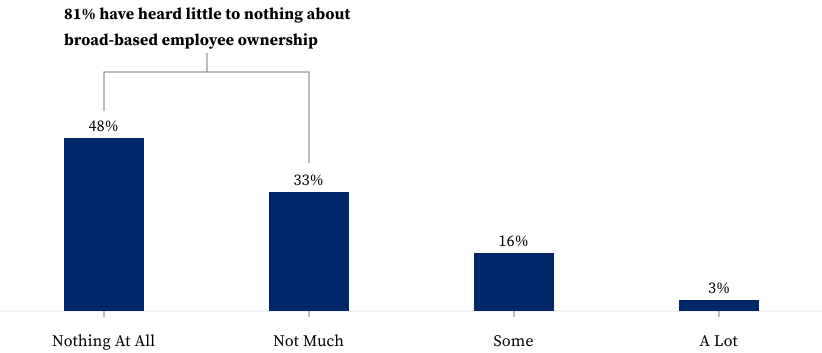
ESOP Polling Data - General Knowledge

Source: Public Opinion Strategies and Impact Research (2023)

However, once informed, the concept is met with overwhelming support across the political spectrum.

“Please indicate if you support or oppose broad-based employee ownership?”
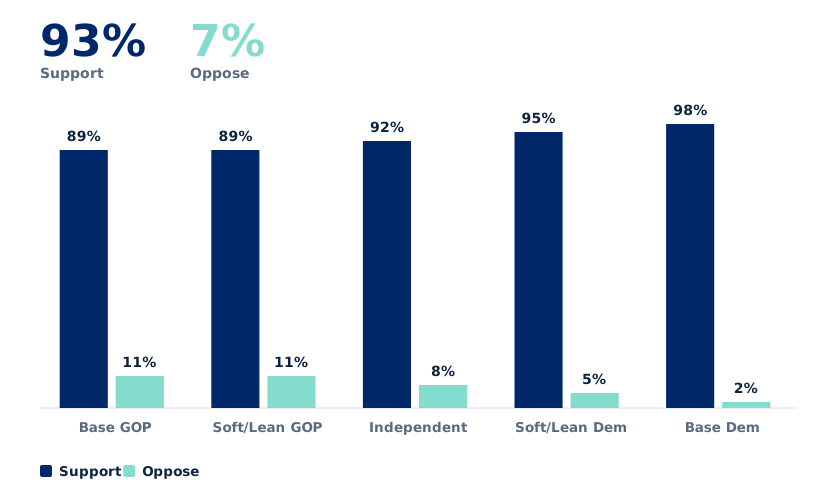
Polling by party: support oppose (slide 31)

Source: Public Opinion Strategies and Impact Research (2023)

…and both Democrats and Republicans want policy intervention to see this idea spread and for broad-based employee ownership to become more common.

“Based on what you know, would you support or oppose a policy where the government would incentivize companies to offer broad-based employee ownership?”
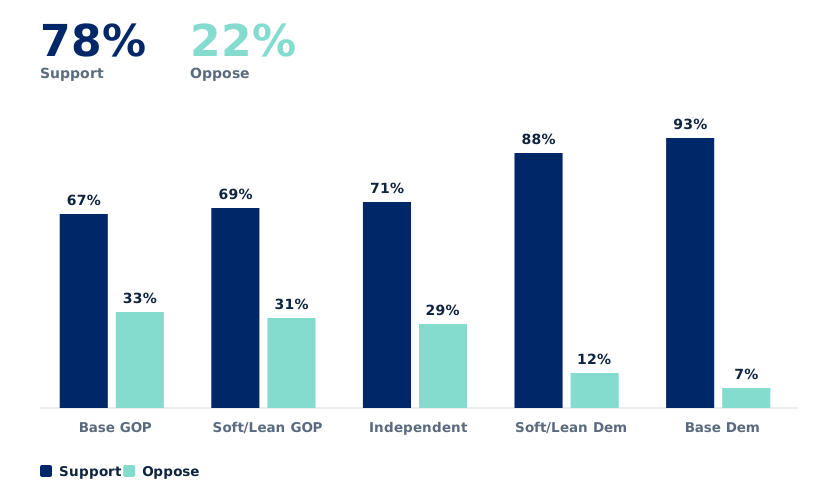
Polling by party: government incentive (slide 36)

Source: Public Opinion Strategies and Impact Research (2023)
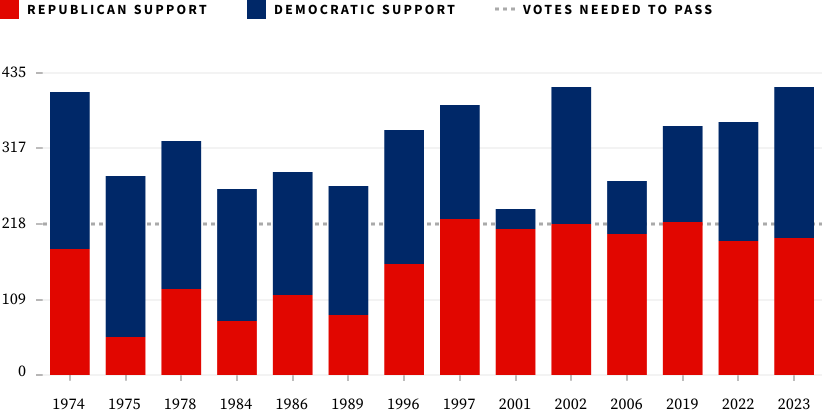
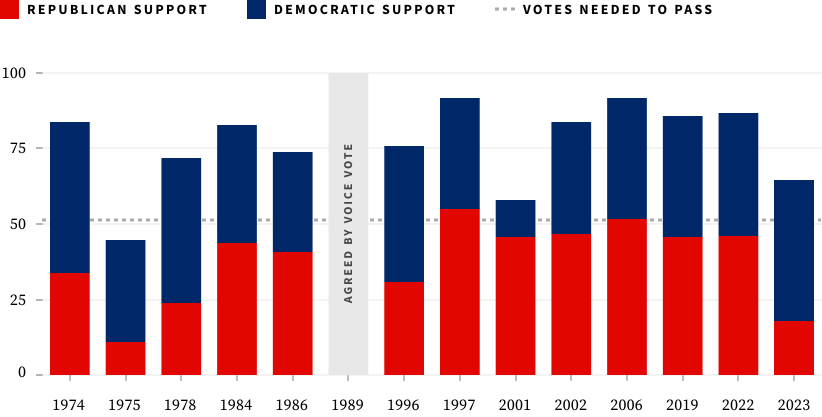
ESOPs have a history of bipartisan support.

ESOP-related legislation has a track record of receiving bipartisan support over the years. The original legislation that’s included in ERISA (1974) passed by near unanimous consent. Since then, many subsequent changes to the ESOP provisions in ERISA – which were part of larger tax bills – have passed with ease. In some cases, the slimmer margins of passage had more to do with the larger bill than with the ESOP provisions.

Votes in favor of amendments that included ESOP provisions.
Explore legislation that passed with support from both sides of the aisle.

ESOP Congress Support Over the Years
ESOPs Senate Support
  1. 1974
    Employee Retirement Income Security Act (ERISA) (establishes ESOPs in law)
  2. 1975
    Tax Reduction Act (created a tax credit for ESOPs)
  3. 1978
    The Revenue Act of 1978 (added new formalities to ESOPs through creation of IRC § 409A)
  4. 1984
    Tax Reform Act of 1984 (created new and substantial tax incentives for employers maintaining ESOPs for employees)
  5. 1986
    Tax Reform Act of 1986 (emphasized the retirement objective of ESOPs by imposing a 10% penalty tax on withdrawals made prior to age 59.5)
  6. 1989
    The Omnibus Budget Reconciliation Act of 1989 (repealed or limited multiple ESOP tax incentives)
  7. 1996
    The Small Business Job Protection Act (SBJPA) of 1996 (widened the availability of ESOPs by allowing S corporation shareholders to participate)
  8. 1997
    Taxpayer Relief Act of 1997 (repealed application of the unrelated business income tax for an employee stock ownership plan that is an S corporation shareholder)
  9. 2001
    Economic Growth and Tax Relief Reconciliation of 2001 Act (initiated a 50% excise tax on prohibited allocations by S corporation ESOPs)
  10. 2002
    Job Creation and Worker Assistance Act of 2002 (increased the contribution limits of man qualified retirement plans, including ESOPs)
  11. 2006
    Pension Protection Act of 2006 (required that employees be able to move employer stock out of their 401(k) plans and ESOPs)
  12. 2019
    John S. McCain National Defense Authorization Act for Fiscal Year 2019 (included provisions of the Main Street Employee Ownership Act of 2018; required the Small Business Administration to promulgate rules to improve lending to ESOPs)
  13. 2022
    The National Defense Authorization Act of 2022 (establishes a five-year federal pilot program allowing for 100% ESOP-owned DoD contractors to receive sole-source follow-on contracts and directs the DoD to study “acquisition authorities that could be used to incentivize businesses to become qualified businesses wholly owned through ESOPs and to overcome challenges to partnering with the Department.”)
  14. 2023
    Consolidated Appropriations Act of 2023 (included the Securing a Strong Retirement Act (SECURE 2.0) and related ESOP provisions)